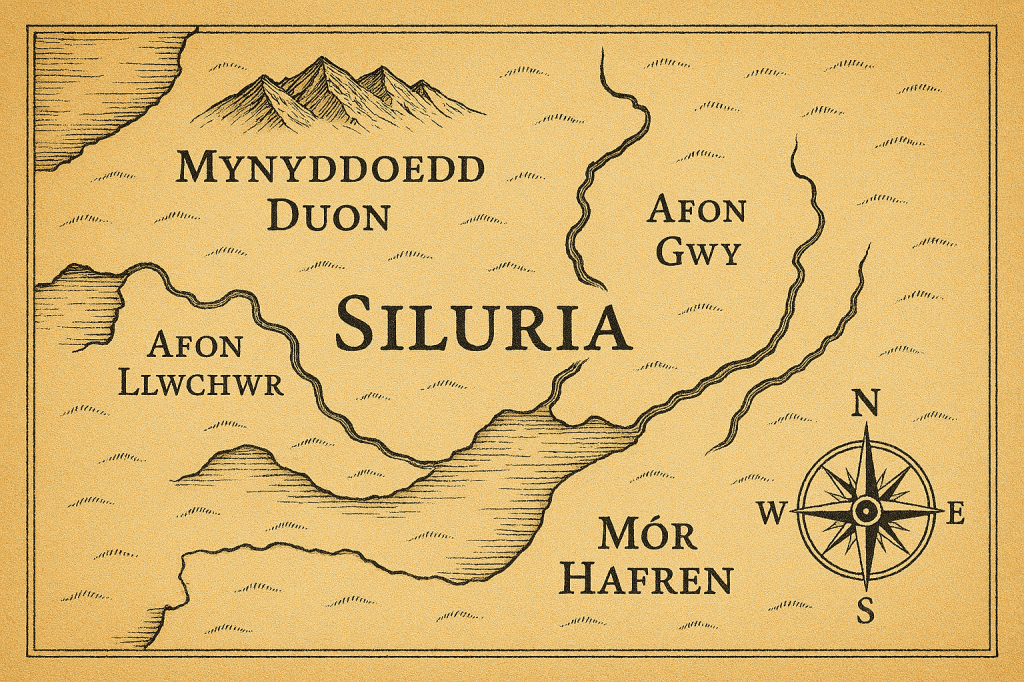
Siluria has always struck me as a place that tells the truth about the world. Not in the mystical sense, not in the “thin places” sense, but in the way a scar tells the truth about the wound that made it. If you walk the old lines long enough, you start to see that the landscape is not just scenery. It is a diagram of how reality is put together.
Under everything lies the landform: the ridges, the escarpments, the river terraces, the coal seams and limestone shelves. This is the part that doesn’t care about us. It shapes everything that happens above it, but it never intervenes. It doesn’t send messages or warnings. It simply is. This is what I call Level 2: the deep structure of reality, the form that shapes without acting. The land is the closest analogue we have to the Logos, if the Logos were made of mud and stone and geological time.
Above that lies the human layer, the scarification of the land. The cuttings, the spoil heaps, the terraces, the abandoned tramways, the canal beds, the ruined mills, the rewilding patches where birch and bramble creep back over the slag. This is the deep structure of Level 3 — the floorboards of the house we live in. Not eternal, not perfect, but persistent. Patterned. Symbolic. Imaginal. A kind of world‑soul made of memory, industry, trauma, labour, neglect, and the stubborn return of green things.
And here is the uncomfortable truth: this layer is not just heritage. It is also toxicity. The spoil heap is a danger of collapse. The slag leaches into the water. The abandoned works are beautiful in the way ruins are beautiful, but they are also reminders of carelessness, exploitation, and the long shadow of human choices. The deep structure of Level 3 holds everything we have deposited into it — the good, the bad, the collective trauma, the collective sin, the pollution of neglect and the pollution of greed. It is the memory of our stewardship, and the memory of our failure to steward.
This is the layer where gods and spirits arise, not as supernatural beings but as imaginal attractors shaped by culture, land, and history. This is where ancestors echo, not as ghosts but as patterns that persist. This is where meaning lives. Not in the bedrock beneath, which is indifferent, and not in the surface above, which is too thin and too noisy, but in the scarred, symbolic floor that holds the weight of everything we have done.
And then there is us. We are the paving stones, the crisp packets, the fag ends, the dog mess. The temporary clutter of daily life. Or, on better days, we are the wildflowers — the foxgloves, the cow parsley, the stubborn little hawthorn saplings that push up through the rubble. We grow for a season, we bloom if we’re lucky, and then we fade back into the soil. Our identities are somewhere between the persistence of a stone and the fragility of a plant. We last long enough to matter, but not long enough to pretend we are permanent.
Nations and civilisations are simply larger versions of the same thing. Big beasts of buildings and structures on the landscape. Or gardens, if you prefer the plant metaphor. They rise, they flourish, they scarify, they collapse, they become rubble and compost in time. None of them are forever. All of them leave something behind in the deep structure — sometimes beauty, sometimes poison, usually both.
Once you see the world this way, the ethic becomes obvious. We are not here to perfect the world or escape it. We are not here to become gods or to ascend into some higher realm. We are here to be good ancestors. To pass on the land — the literal land and the imaginal land — in no worse condition than we found it. To live lightly. To leave behind something that can be built on, not something that has to be cleaned up.
We are compost for tomorrow. And that is not a tragedy. It is the condition of possibility for everything that grows.
Siluria, in the end, is not just a place. It is a way of seeing. The land as Level 2, the scarred floor as the deep structure of Level 3, and our brief lives as the fragile surface. A house built on bedrock, with a floor that remembers everything, and a garden that blooms and dies and blooms again.
A landscape that teaches us how to live.
 Hearth and Heart Magazine
Leave a comment