A curious thing happened recently.
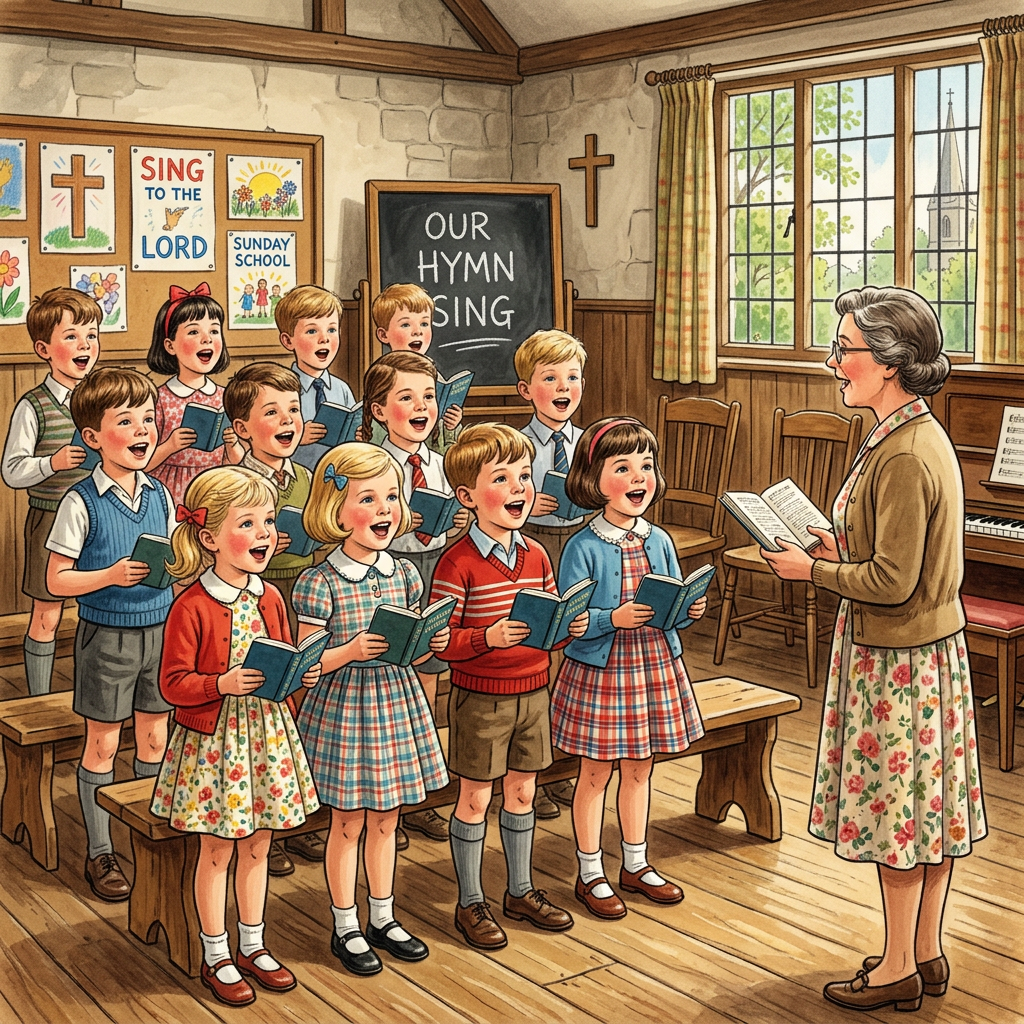
A Sunday School chorus escaped containment.
After lying dormant somewhere in the deeper recesses of my mind for several decades, it suddenly resurfaced and began repeating itself without invitation:
Jesus died for all the children,
All the children of the world…
Readers of a certain evangelical vintage may recognise it.
Of course, this is the sort of thing that happens when one is raised on a steady diet of Brethren theology and Sunday School choruses. You can get the boy out of the Gospel Hall, but apparently you cannot get the Gospel Hall out of the boy.
Intellectually, however, I have tended to regard much of this sort of piety with a mixture of nostalgia, affection and suspicion. In particular, I have never been able to make much sense of the idea that God requires blood in order to forgive.
Yet after thinking about these things again, I find myself considering a different possibility.
The first-century hope for a Messiah was, in large part, political. Israel needed liberation. Rome had to go. Yet history had already raised an awkward question. The Maccabees had liberated Judea, only for the Hasmonean kingdom to descend into faction, civil war and eventually Roman domination. The foreign oppressor had been overcome. The human problem had not.
The question therefore becomes not merely: who can defeat Rome?
But: who can be trusted with the Kingdom afterwards?
On this reading, Jesus is not significant because he pays a debt. He is significant because he succeeds where humanity repeatedly fails.
He trusts.
He remains faithful to God even when that fidelity leads through suffering, humiliation and death.
The Cross is not a payment but a consummation. Its significance lies not in the blood that is shed but in the fidelity that is displayed. The defining moment of the story is perhaps not the nails but the words:
Not my will, but yours be done.
If resurrection follows, then resurrection is God’s vindication of that trust.
In this sense Jesus becomes humanity’s mediator. Not because God is reluctant to receive humanity, but because humanity is so often incapable of finding its own way home. Many are too lost, too broken, too frightened or too wounded to complete the journey themselves. The mediator is the one who has crossed the gulf. The one who has walked the path and stands before God as the successful representative of humanity.
Perhaps this is why the New Testament says:
Therefore God highly exalted him.
Not because God suddenly became pleased by a blood sacrifice, but because Jesus proved himself worthy of the role. The Messiah is not merely chosen. He is proven.
The philosopher may know the Good. The saint trusts it. Jesus, on this reading, is the one whose trust survives even death.
Before the atheists roll their eyes and the Christians begin celebrating the return of the prodigal, let me be clear. Christianity contains many extraordinary historical, metaphysical and supernatural claims. I remain unconvinced by many of them. A coherent story is still a story. Beauty, elegance and internal consistency are not evidence.
And yet.


Leave a comment