Tag: philosophy
-
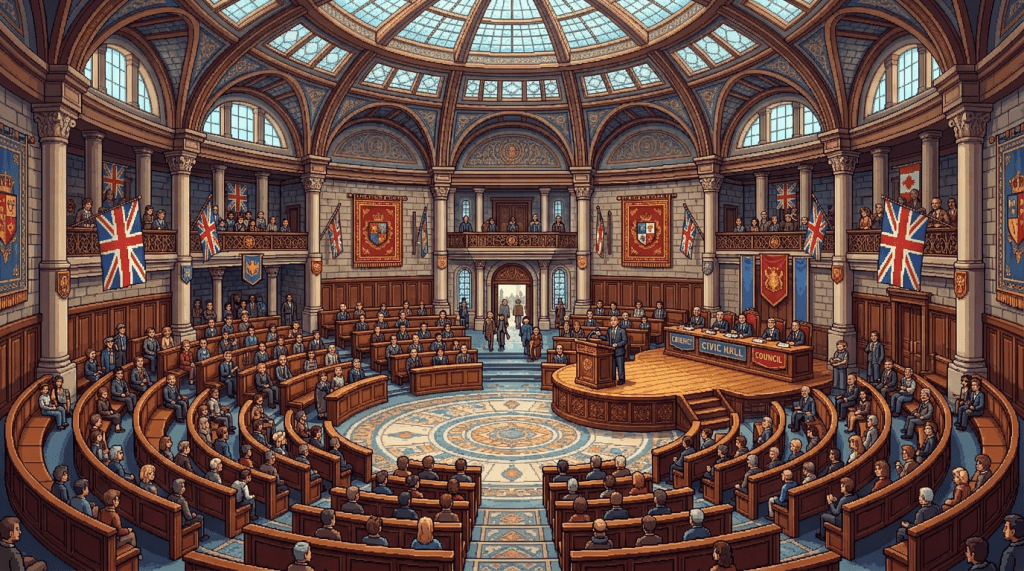
From Ontology to Political Philosophy – a category error?
It is often said that relating ontology to political philosophy is a category error. Metaphysics deals with being; political theory deals with institutions, laws, and collective decision‑making. The two domains, it is argued, should not mix. But this objection only holds if political concepts are treated as pure abstractions. My argument is that nations are…
-

A Neutral‑Monist Metaphysics of Ground, Archetype, and Space‑Time
My metaphysical outlook begins with a neutral‑monist conviction: that the ultimate ground of reality is prior to any distinction between mind and matter. This ground is not a “layer” in any structured sense, because layers imply intelligibility, and intelligibility itself is already a differentiation. The ground is simply the condition from which intelligibility arises. What…
-
Introducing Civic Forum: A New Home for My Political Writing
For some time, my political reflections have lived under the heading Politics of Scale. It was a useful phrase, capturing my belief that political life only makes sense when it is rooted in the appropriate level of community, authority, and responsibility. But as my thinking has developed, and as I’ve clarified the tradition I stand…
-
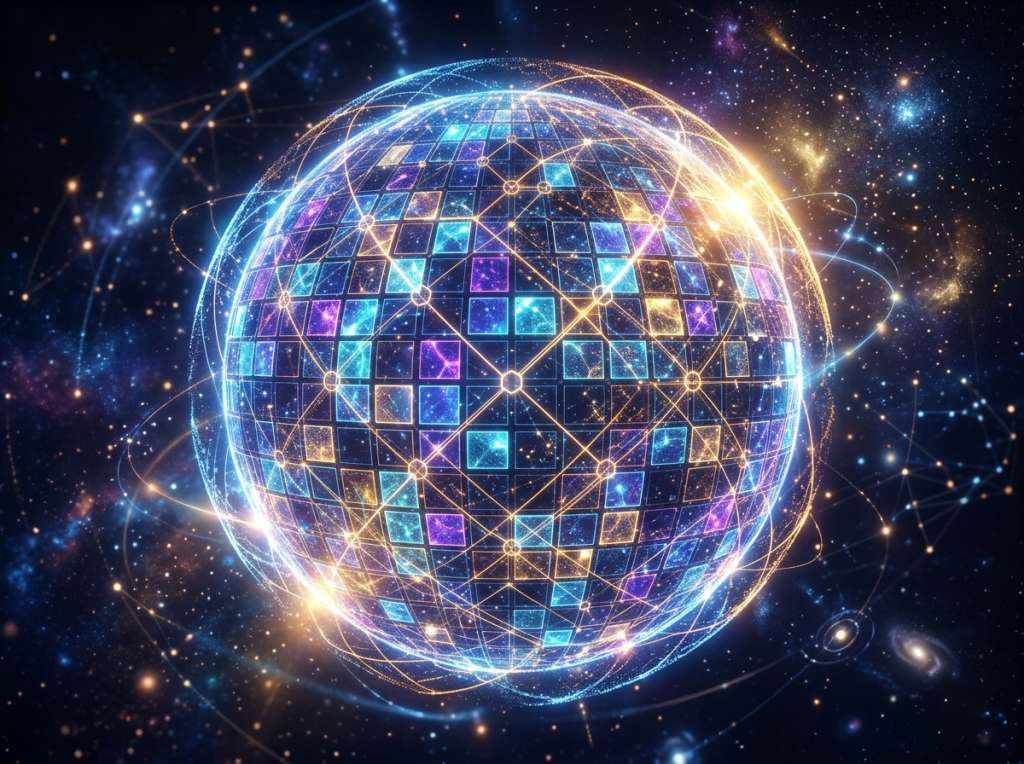
Introducing the Cybernetic Mosaic: A Political Futurist Thought‑Experiment
In an age when political imagination feels exhausted, the Politics of Scale demands that we think again about how human beings organise themselves. The old binaries — centralisation versus localism, globalism versus nationalism, technocracy versus democracy — no longer map cleanly onto the world we actually inhabit. What we need is a political architecture capable…
-
Holons, the Block Universe, and the Omega Point
My metaphysical outlook rests on three complementary ideas: panpsychic nested holons, the Block Universe, and Teilhard de Chardin’s Omega Point. Each offers a different angle on the structure of reality; together they form a single, coherent picture. 1. Panpsychic Nested Holons At every scale, reality can be understood as a holon: a whole that is…
-

A Plain‑Language Summary of My Metaphysics
At the heart of this metaphysics is a simple idea: reality has depth, and we live inside more than one layer of it at the same time. What we normally call “the world” is just the surface level — the part we can touch, measure, and describe. But beneath and within that surface are deeper…
-
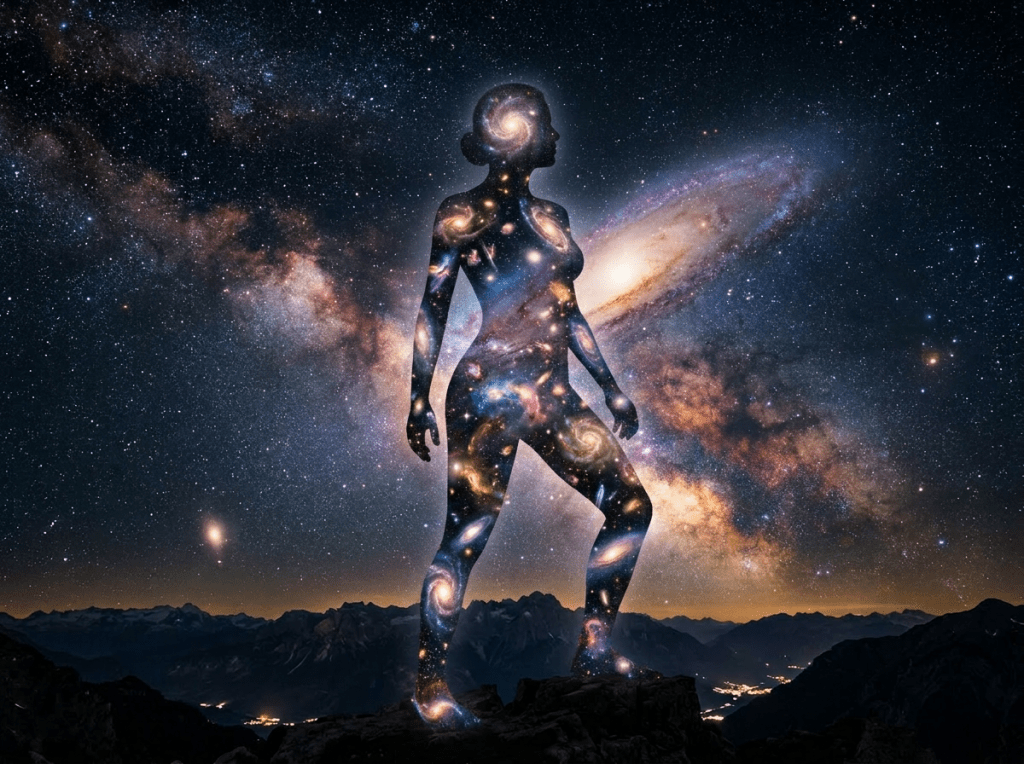
Can Metaphysics Make Space for a God Who Loves?
For many people, metaphysics feels too abstract to touch the deeper human longing for a God who loves — not as an impersonal force or a pattern of coherence, but as a presence that desires intimacy, cares for the individual, and grieves their wounds. Modern thought often dismisses this longing as a wish for a…
-

Explaining the Axiom
“To act well is to increase coherence without diminishing presence.” This axiom captures the ethical centre of a metaphysics built on dynamic balance. It proposes that good action has two simultaneous obligations. First, it should increase coherence: the degree to which relationships, meanings, and patterns fit together in a way that supports flourishing. Coherence is…
-

Understanding the 20 Core Axioms of Existence
(Three expansions for each of the 20 Core Axioms — unpacking, clarifying, and deepening.) Axiom 1 — The Real is single, but disclosed in three resolutions. 1.1 Unity is not simplicity; it is depth refracted. 1.2 The three resolutions are perspectives, not partitions. 1.3 Confusion arises when one resolution is mistaken for the whole. Axiom…
-
THE TWENTY CORE AXIOMS
1. The Real is single, but disclosed in three resolutions: the Absolute, the Archetypal, and the Actual. The foundational architecture. 2. The Absolute is depth without form; the Actual is form in motion; the Archetypal is the bridge between them. The three resolutions in dynamic relation. 3. The One does not divide; it refracts. Non‑dualism…
 Hearth and Heart Magazine